
Cockroaches
Recognition at a glance.
Read these reference points together. A single photograph or sign can guide a check, but it may not confirm the species, source or extent of activity.
General appearance
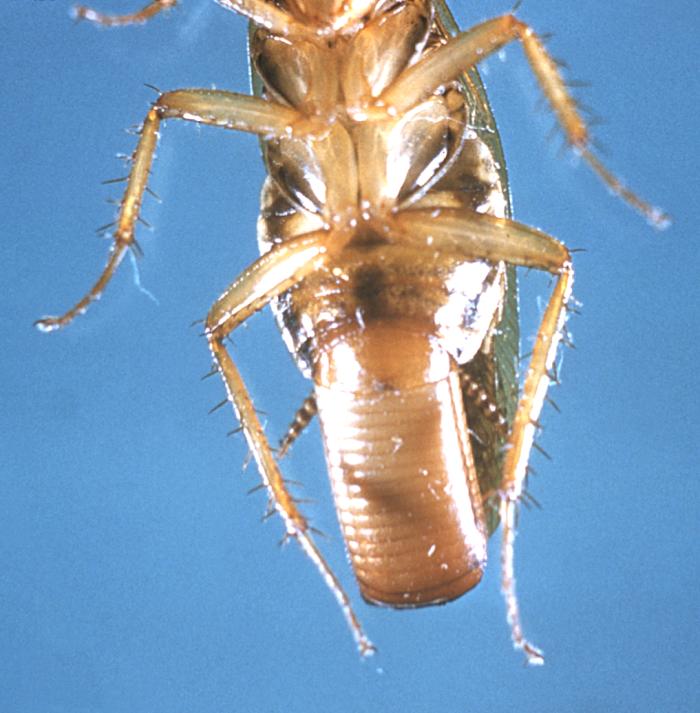
The German cockroach is small and light brown, with two parallel dark bands behind the head.
Possible evidence
Live or dead cockroaches, droppings, egg cases and recurring activity in sheltered areas.
Frequent areas
Heat, water and food: plumbing, appliances, cupboards, cracks and cluttered spaces.
Visual limitation
Species and similar-looking insects can require different responses; one photograph may not be enough.
Photographic reference
Observe the physical evidence.
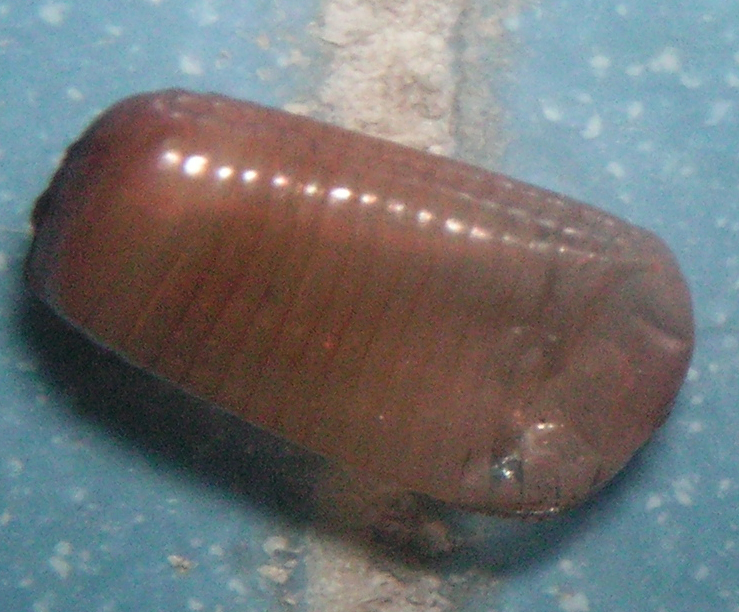
The following photograph shows a documented example. Similar-looking traces can have other causes; keep both a close view and a context view to support an evaluation.
Reading the premises
Where to look without disturbing the area.
Observe visually and photograph accessible signs. Do not open a structure, move an installed device or apply a product solely to confirm a hypothesis.
- 01
Under and behind appliances
Look in accessible spaces near the refrigerator, stove and small appliances.
- 02
Plumbing and moisture
Observe around pipes, beneath sinks and near leaks or condensation.
- 03
Food cupboards
Check corners, hinges, packaging and accessible residue.
- 04
Cracks and warm motors
Note crevices and warm areas without dismantling equipment.
- 05
Cardboard and storage
Record activity around boxes and clutter before moving belongings.
Cockroaches
Read the signs together
Observed cockroaches, droppings, egg cases or activity near heat, water and food may warrant an evaluation. The distribution of signs helps indicate possible harbourage.
Cockroaches
Why the species matters
Species do not necessarily occupy the same areas or respond to the same control measures. A blurred image or crushed insect may be insufficient for reliable identification.
Cockroaches
Prudent first measures
Store food in sealed containers, clean residue, manage waste, correct leaks when possible and reduce clutter gradually without spreading belongings from an active area.
Cockroaches
Actions to avoid
Do not apply several products or aerosols at random, never mix products and do not move an installed device without instructions. An untargeted action can complicate observation and the next control step.
Cockroaches
What to photograph
Take a sharp top view if possible, add a size reference without touching the insect and photograph the surrounding area, egg cases or associated traces.
Cockroaches
What the evaluation examines
Probable species, harbourage, water and food sources, heat, travel routes, incoming belongings and the apparent extent of activity.
Cockroaches
Buildings and commercial premises
Coordination may be needed between units, common spaces or areas of a facility. Centralize observations and avoid having several people apply different measures without a common plan.
Last editorial review: July 25, 2026.
This content is provided for general information. The signs described may have several causes and do not replace identification or an on-site evaluation. Use a pesticide only in accordance with its label and applicable rules.