
Bed bugs
Recognition at a glance.
Read these reference points together. A single photograph or sign can guide a check, but it may not confirm the species, source or extent of activity.
General appearance
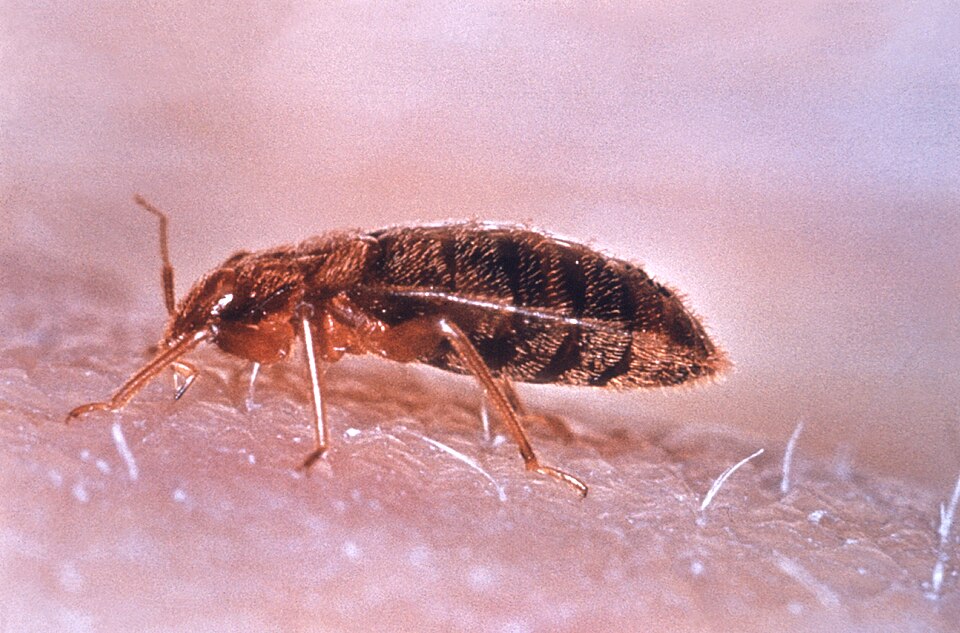
The adult is flat, oval and reddish brown; younger stages are smaller and may appear paler.
Possible evidence
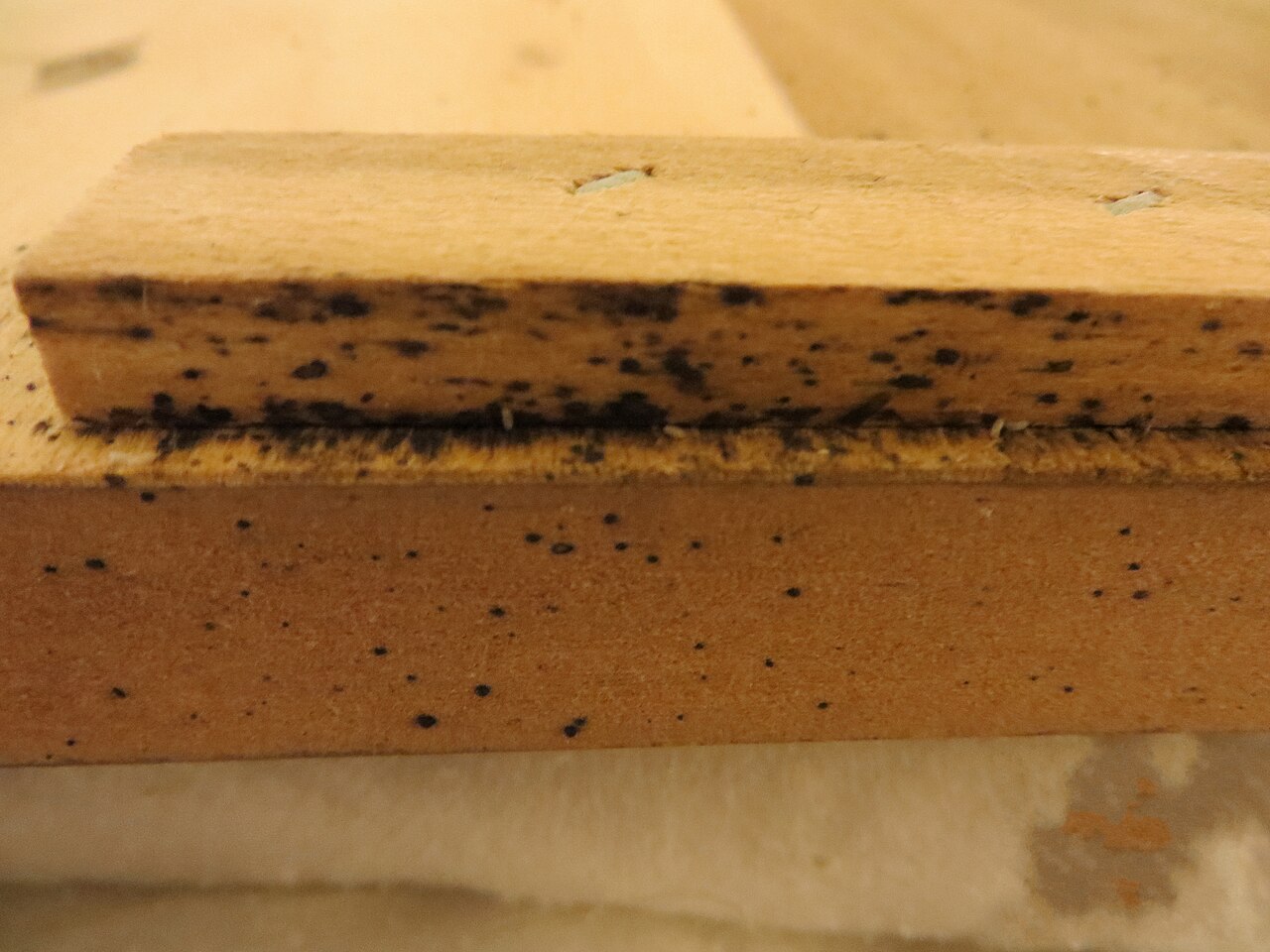
Live insects, small dark spots, shed skins and eggs near resting areas.
Frequent areas
Mattress seams, box spring, bed frame, headboard, baseboards and nearby furniture.
Visual limitation
A skin mark alone cannot confirm the presence of a bed bug.
Photographic reference
Observe the physical evidence.
The following photograph shows a documented example. Similar-looking traces can have other causes; keep both a close view and a context view to support an evaluation.
Reading the premises
Where to look without disturbing the area.
Observe visually and photograph accessible signs. Do not open a structure, move an installed device or apply a product solely to confirm a hypothesis.
- 01
Seams and labels
Visually examine accessible mattress seams without moving the mattress into another room.
- 02
Bed frame and headboard
Observe accessible joints, crevices and attachment points.
- 03
Box spring
Look at visible edges and folds without tearing the fabric.
- 04
Baseboards and nearby furniture
Check crevices and belongings close to the resting area.
- 05
Luggage and moved belongings
Seal an item in a container if it must be moved and wait for instructions.
Bed bugs
Confirm with physical evidence
Live bed bugs, small dark spots, shed skins or eggs may warrant a check. Skin reactions vary and can have other causes; they are not an identification.
Bed bugs
What their presence does not mean
Bed bugs do not indicate poor cleanliness. They may be transported in luggage, clothing, furniture or other belongings and can be introduced into many different environments.
Bed bugs
Actions to avoid
Avoid moving furniture, bedding or belongings from one room to another before there is a plan. Do not discard a piece of furniture without clearly identifying it, and do not apply several products at random.
Bed bugs
Prudent first measures
Preserve evidence, limit the movement of belongings and record where signs were found. If an item must be moved, place it in a sealed bag or container and wait for directions specific to the situation.
Bed bugs
What to photograph
Take a close view of the insect or sign, a view of the crevice or furniture and a wider view of the area. If possible, preserve a specimen without crushing it in a small closed container.
Bed bugs
What the evaluation examines
Resting areas, cracks, nearby furniture, baseboards, physical evidence, moved belongings and possible distribution between rooms.
Bed bugs
Tenants and buildings
Notify the owner or manager promptly, preferably in writing. Coordination may need to include adjacent units. Preparation, absence and re-entry directions depend on the selected method and, when a product is used, its label.
Last editorial review: July 25, 2026.
This content is provided for general information. The signs described may have several causes and do not replace identification or an on-site evaluation. Use a pesticide only in accordance with its label and applicable rules.