
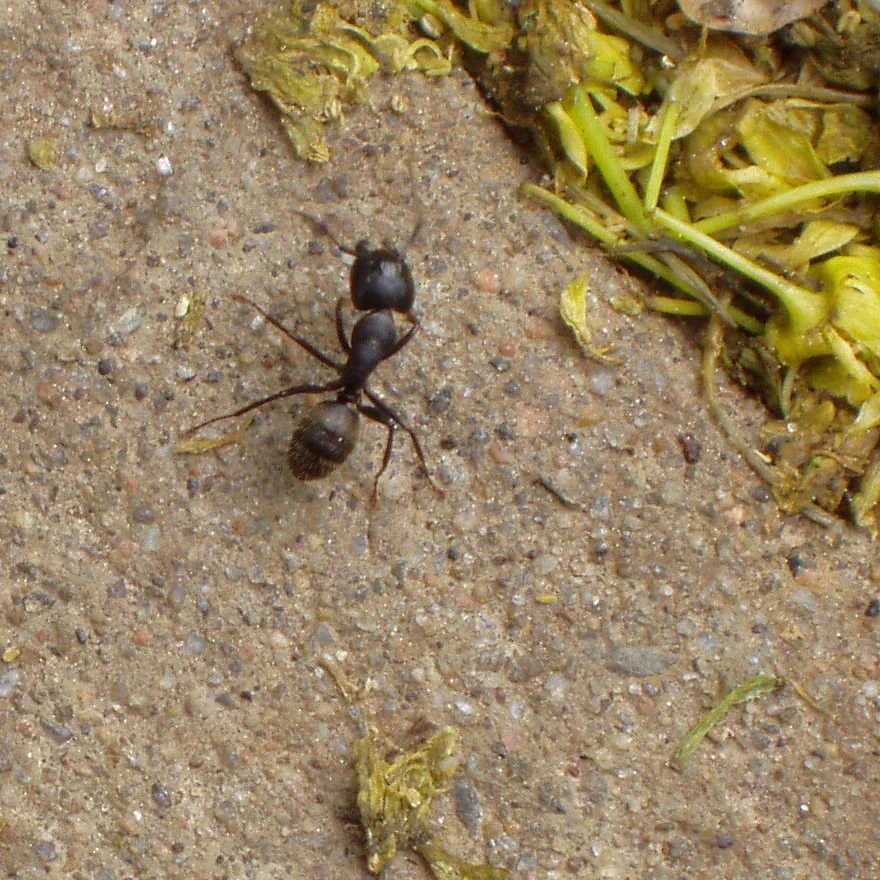
Visual comparison
Profiles worth distinguishing.
These examples illustrate ants that may be encountered in Québec or in buildings in Greater Montréal. This selection is neither exhaustive nor a ranking by frequency. Apparent size, colour and a photograph can guide a review without confirming the species on their own.
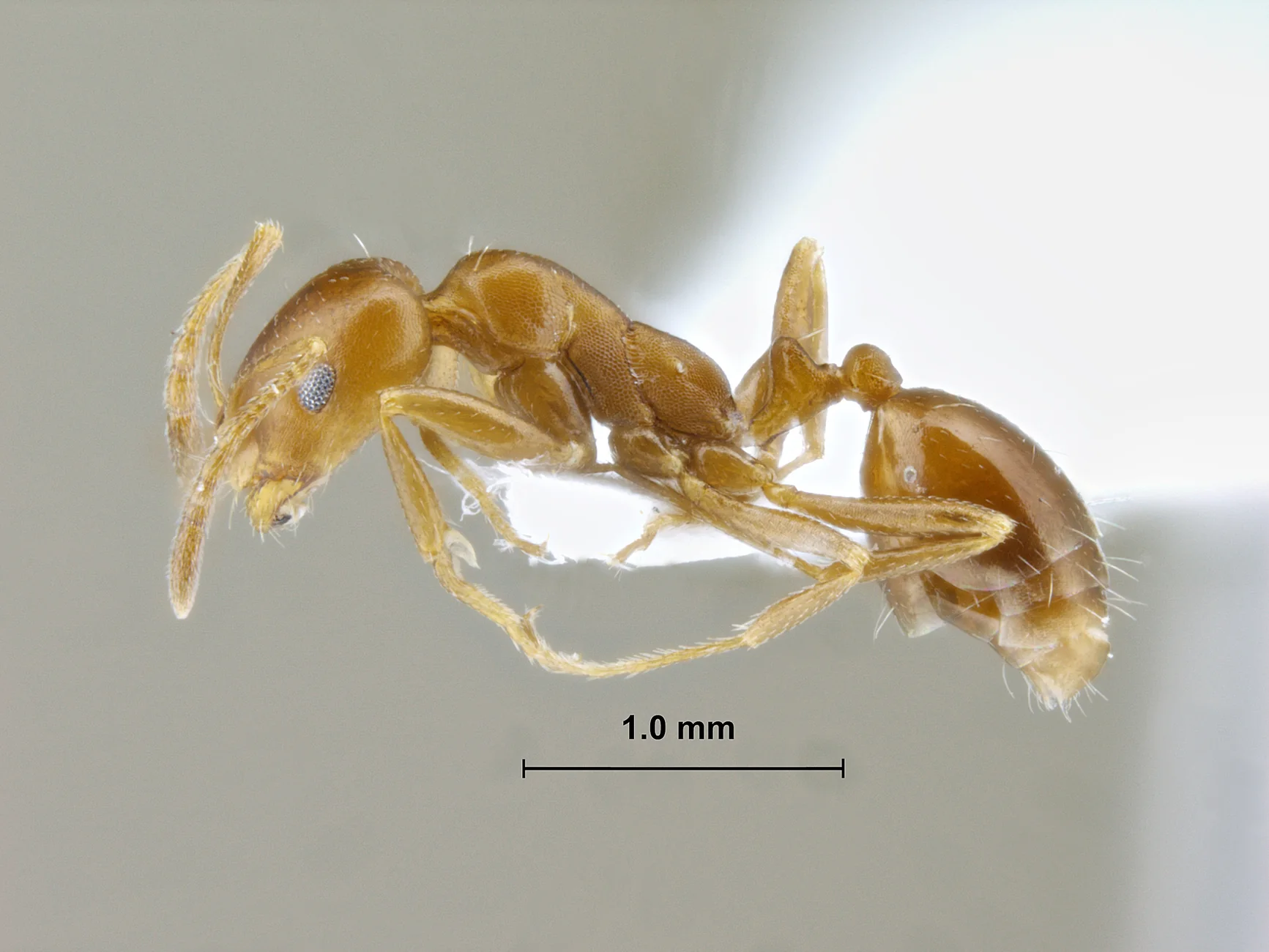
Monomorium pharaonis
Pharaoh ant
This is a very small, pale yellow-to-light-brown ant. The scale in the image is essential: lighting and magnification can make colour and apparent size misleading in an ordinary photograph.
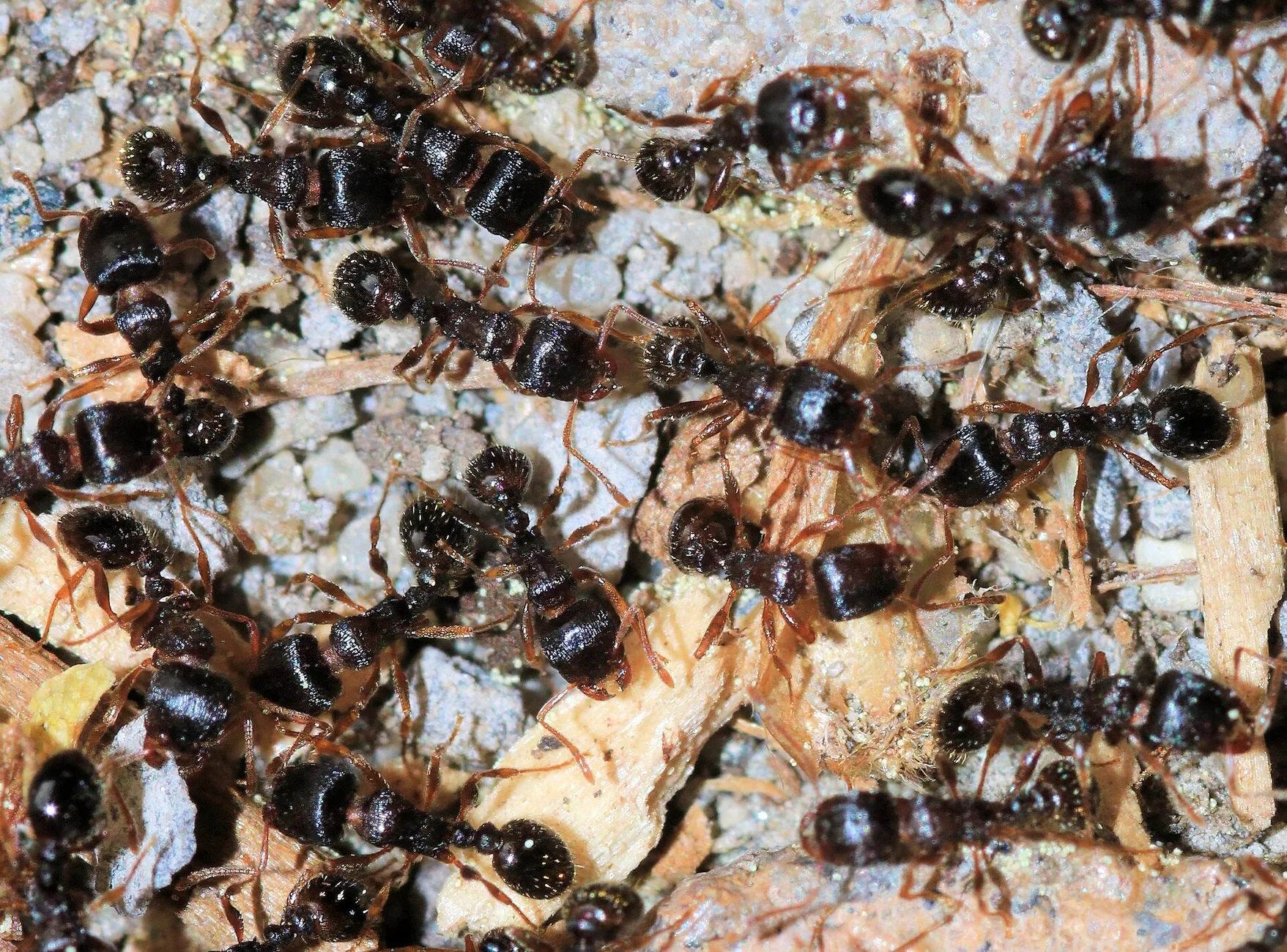
Tetramorium immigrans
Pavement ant
These small, dark ants may be observed around soil, paving, foundations or cracks and can forage indoors. Several other ants can look similar without a clear specimen and scale.
Ants
Recognition at a glance.
Read these reference points together. A single photograph or sign can guide a check, but it may not confirm the species, source or extent of activity.
Appearance varies
Size, colour and worker shape differ among ant species; winged forms can also look different from workers.
Possible evidence
Recurring trails, concentrated activity, winged ants, material pushed from a gap or repeated activity near wood or moisture.
Areas to observe
Doors, windows, foundations, utility penetrations, plumbing, food and waste areas, damp wood and accessible void edges.
Visual limitation
A trail shows a travel route, not necessarily the colony location; one image may not support reliable identification.
Photographic reference
Observe the physical evidence.
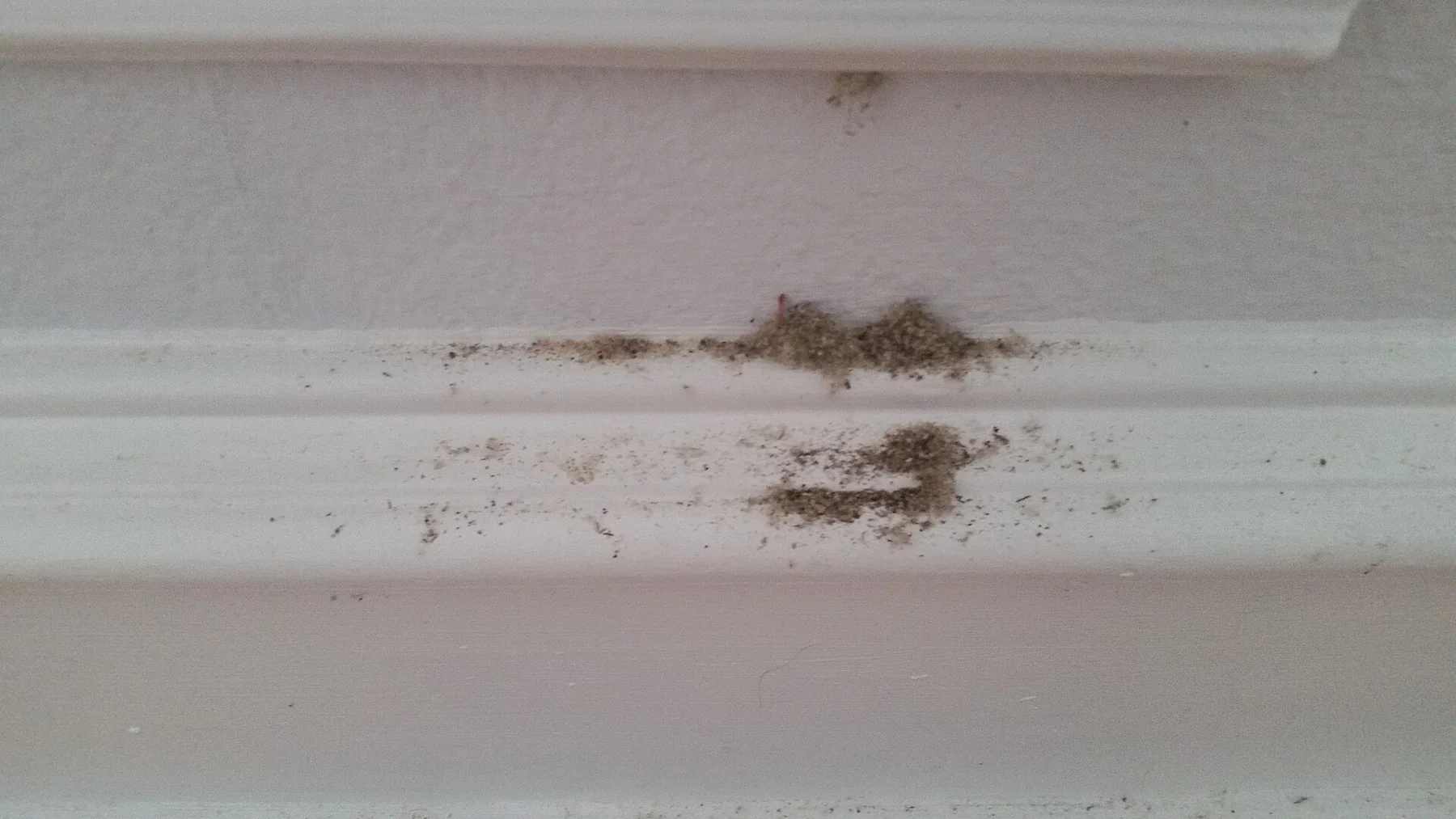
The following photograph shows a documented example. Similar-looking traces can have other causes; keep both a close view and a context view to support an evaluation.
Reading the premises
Where to look without disturbing the area.
Observe visually and photograph accessible signs. Do not open a structure, move an installed device or apply a product solely to confirm a hypothesis.
- 01
Doors, windows and foundations
Follow visible movement without blocking it and note the exact gap, joint or exterior route being used.
- 02
Plumbing and moisture
Observe beneath sinks, near condensation, leaks and damp materials without opening a wall or cabinet structure.
- 03
Food and waste areas
Check residue, containers, recycling, pet food and waste while keeping food in sealed containers.
- 04
Wood and accessible trim
Photograph debris, small openings and repeated activity near wood; do not probe or dismantle the material.
- 05
Building and exterior context
Record nearby vegetation, firewood, attached structures, common areas and other units where activity has been reported.
Ants
Possible profiles, not a ranking
Québec references list little black ants, odorous house ants, field ants and several carpenter ants, among others. Pharaoh ants and pavement ants may also be considered when examining activity in Greater Montréal buildings. This is not an exhaustive list or a claim that every species occurs in every area or building.
Ants
Identification changes the response
Ant species can differ in nesting sites, travel patterns and contributing conditions. Compare more than colour: include apparent size, body shape, the location, time of activity and any physical evidence. A clear specimen or an on-site evaluation may be needed.
Ants
Interpret a trail carefully
Record where a trail begins and ends, when it is active and whether activity changes after food, water or waste is removed. Do not assume the visible endpoint is the nest; workers may travel between an exterior source, a satellite location and a food or water source.
Ants
Carpenter ants and wood-related signs
Carpenter ants excavate galleries in wood rather than eating the wood. Sawdust-like material near trim or a small opening, repeated activity around damp or deteriorated wood and winged ants indoors can justify closer evaluation. Similar debris or moisture damage can have other causes.
Ants
Pharaoh ants and colony fragmentation
Pharaoh ants are extremely small and, in this region, establish themselves inside heated buildings. Montréal’s Insectarium notes that insecticide applied directly to their trails can encourage colony fragmentation and satellite nests. Do not spray a trail at random, and report any product or measure already used.
Ants
What the season can suggest
Activity observed only in spring or summer may come from ants foraging indoors from an outdoor colony. Indoor winter activity more strongly suggests a nest in or near the building. In Québec, winged adults emerging indoors in winter particularly support examining the possibility of carpenter ants, without replacing identification.
Ants
Prudent first measures
Clean accessible food residue, seal food and pet food, manage waste, correct leaks when possible and keep vegetation or stored wood from direct contact with the building. Preserve the observed route long enough to document it before making a targeted correction.
Ants
Actions to avoid
Do not spray several products along a trail, never mix products and do not disturb bait or another device already in place. Do not open a wall, remove structural material or seal an active route at random solely to locate a colony. Any pesticide use must follow the registered label and applicable rules.
Ants
What to photograph
Take a sharp close view from above and from the side when possible, include a scale without touching the ant, photograph the trail and add a wider view of the surrounding area. Photograph debris, winged forms and the opening or material nearby without including people or private documents.
Ants
When to request an evaluation
Recurring indoor trails, activity in several areas, winged ants indoors, debris associated with wood or activity that continues after basic food, waste and moisture corrections can support an evaluation request. SGP reviews requests and provides services by appointment only; it does not offer emergency service.
Ants
Buildings and commercial premises
In a multi-unit or commercial building, centralize dated observations and notify the owner or manager promptly. The review may need to consider shared walls, conduits, food areas, receiving, waste, exterior routes and reports from adjacent spaces.
Last editorial review: July 25, 2026.
This content is provided for general information. The signs described may have several causes and do not replace identification or an on-site evaluation. Use a pesticide only in accordance with its label and applicable rules.